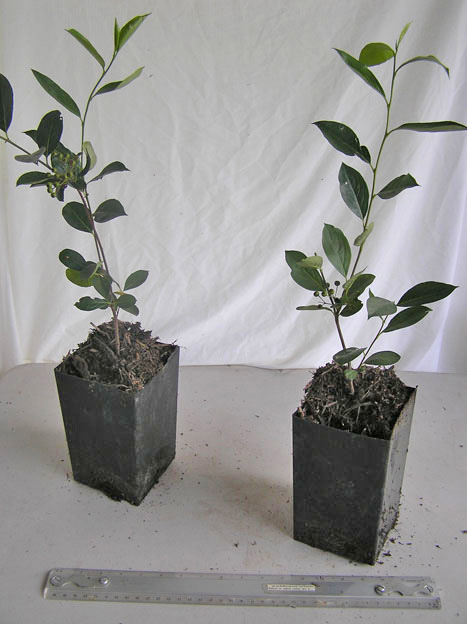
Would you like to buy some aronia plants? Would you like to plant them in your garden so you can harvest your own aronia berries? If so, you are not alone. Start by choosing a reputable nursery or garden center that sells high-quality plants. Three of the mail-order nurseries that I recommend are discussed in this blog. (We do not sell aronia plants.) Please let us know if there are other sources of aronia plants that you like.
If you already have one or more aronia plants, you can propagate those plants by vegetative methods. Aronia cultivars, such as Viking and Nero, are most often propagated by vegetative methods. This includes propagation by semi-hardwood and hardwood stem cuttings, layering, and micropropagation. You can also dig-up and transplant young suckers at the base of clump.
Aronia cultivars can also be grown from seed. Because they produce a high percent of apomictic seed, they will come true from seed. Most cultivars are also nearly seedless, so it is difficult to get many seed. This post includes advice about how to grow aronia plants from seeds (read the post entitled "Aronia seeds for sale").
If you purchase low quality, cheep plants, then you are asking for trouble! And you will most likely get what you pay for -- puny plants that have a low survival rate. You will be disappointed and you will actually end up paying more than if you had purchased good plants to start with. In my opinion --

The aronia cultivar that I recommend for fruit production is Viking. This cultivar is very vigorous and will eventually be a very large plant. If not pruned to control its height and spread, one plant will grow as large as a common lilac bush and take up at least a 10 by 10 foot area and be at least 8 to 10 feet tall. (To learn more about the origin of aronia cultivars, read the article published in HortScience.)
Aronia cultivars that have been selected for ornamental landscape purposes, such as Autumn Magic and Iroquois Beauty, are smaller plants that take up much less space but their fruit is also edible. These ornamental cultivars also have better fall foliage color than Viking but they will usually not produce as many pounds of fruit per plant and the individual berries may be a little smaller than those of Viking or Nero (a similar cultivar). However, in the same space it takes for one Viking plant, you might be able to plant two or more of the landscape cultivars. However, the Viking cultivar is my first choice for commercial fruit production in the United States.
* Raintree Nursery is located in Morton , Washington

If you already have one or more aronia plants, you can propagate those plants by vegetative methods. Aronia cultivars, such as Viking and Nero, are most often propagated by vegetative methods. This includes propagation by semi-hardwood and hardwood stem cuttings, layering, and micropropagation. You can also dig-up and transplant young suckers at the base of clump.
Aronia cultivars can also be grown from seed. Because they produce a high percent of apomictic seed, they will come true from seed. Most cultivars are also nearly seedless, so it is difficult to get many seed. This post includes advice about how to grow aronia plants from seeds (read the post entitled "Aronia seeds for sale").
 |
| Choose healthy plants from reputable sources |
To purchase aronia plants, click on the photo
or any of the ads to the right. --->
If you purchase low quality, cheep plants, then you are asking for trouble! And you will most likely get what you pay for -- puny plants that have a low survival rate. You will be disappointed and you will actually end up paying more than if you had purchased good plants to start with. In my opinion --
Quality trumps price!

The aronia cultivar that I recommend for fruit production is Viking. This cultivar is very vigorous and will eventually be a very large plant. If not pruned to control its height and spread, one plant will grow as large as a common lilac bush and take up at least a 10 by 10 foot area and be at least 8 to 10 feet tall. (To learn more about the origin of aronia cultivars, read the article published in HortScience.)
Aronia cultivars that have been selected for ornamental landscape purposes, such as Autumn Magic and Iroquois Beauty, are smaller plants that take up much less space but their fruit is also edible. These ornamental cultivars also have better fall foliage color than Viking but they will usually not produce as many pounds of fruit per plant and the individual berries may be a little smaller than those of Viking or Nero (a similar cultivar). However, in the same space it takes for one Viking plant, you might be able to plant two or more of the landscape cultivars. However, the Viking cultivar is my first choice for commercial fruit production in the United States.
To order Viking aronia plants, all you need to do is click on any of the ads for aronia plants on this website. Click on the photo of the aronia berries to the right or on the ads for aronia plants (also on the right) and your computer will automatically go the web page where you can order the plants you want.
Three of the sources of aronia plants that I recommend are:
* Hirt’s Gardens is located inWadsworth , Ohio
* Miller Nurseries is located inCanandaigua , New York
Three of the sources of aronia plants that I recommend are:
* Hirt’s Gardens is located in
* Miller Nurseries is located in
Hirt’s Gardens (formerly Hirt's Greenhouse & Flowers) is one of Ohio
To get the scoops on Hirt’s Gardens, Miller Nurseries, and Raintree Nursery, you can visit Dave’s Garden website and read the most recent reviews written by customers. The plants that I have purchased from these nurseries in the past have always been healthy, high quality plants. But if there is a problem with your order, you should contact the nursery directly to request a refund or a replacement. For a list of other nurseries that sell aronia plants, visit our website Everhart Horticulture Consulting. (We do not sell aronia plants.)
As a consulting business, Everhart Horticulture Consulting provides advice on many horticulture crops including aronia. This includes recommendations and advice on where to buy liners and larger aronia plants, what cultivars to plant, upkeep, maintenance, weed and pest control, irrigation, when to plant, site selection, soil testing, plant propagation, pest management, where and how to plant, mechanized planting, plant spacing, mechanized harvesting, along with where to market, budgets, custom business plan writing, what aronia grower group you might want to join, and everything else you need to know. As a client of our consulting business, you will get help finding answers to any and all of the aronia questions you might have.
We will also provide follow-up support and assistance for as long as you need us at no additional cost to you. Even after I have consulted with you, I will continue to help you and share information with you as long as you freely share information and your experiences with me. We believe in openness, sharing, transparency, and cooperation.
Commercial aronia consultations take at least 4 to 5 hours plus follow-up time. Visit our website and contact us for price quotes.
Please recommend this website http://aroniainamerica.blogspot.com/ to a friend, family member, or anyone who might be interested in aronia.

Please post a comment in the box below. To learn more about aronia, visit our website Everhart Horticulture Consulting.
Thank you,
Dr. Eldon Everhart
*********************************************************************
Please recommend this website http://aroniainamerica.blogspot.com/ to a friend, family member, or anyone who might be interested in aronia.

Please post a comment in the box below. To learn more about aronia, visit our website Everhart Horticulture Consulting.
Thank you,
Dr. Eldon Everhart


I live on a tobacco farm in Kentucky and my father and I have been talking about switching the farm over to Aronia Berries. Where could I buy Aronia Melanocarpa "Nero" seeds at? I'm think that a pound of seed would be more than enough.
ReplyDelete‘Nero’ is one of several cultivar of Aronia melanocarpa. Aronia cultivars are propagated by asexual methods (such as cuttings) rather than from seeds. F. W. Schumacher Company (www.treeshrubseeds.com) sells seeds of Aronia melanocarpa but not ‘Nero.’
ReplyDeleteI recall eating choke berries when visiting my grandparents in Iowa as a kid. I currently live in Ecuador, S.A. I would like to try my hand at growing some here. I live in a valley in the Andes at around 8,500 feet above sea level. What is your thoughts.
ReplyDeleteThank you,
If the berries you ate were harvested from wild plants, then they were probably chokecherries rather than chokeberries, unless they were harvested from wild plants in northeast Iowa. Aronia melanocarpa is on the state endangered species list. Only a few wild plants have ever been documented. They grow in only one small area in northeast Iowa. It is somewhat misleading to say that aronia is native to Iowa. That implies that it grows throughout Iowa and that is not true.
ReplyDeleteIn contrast, wild chokecherry plants are very common all over Iowa and are found throughout the United States. For more information about this topic, read the post on this blog entitled “Is it chokeberry or chokecherry?”
If the winter temperatures where you live in Ecuador are cold enough for a long enough time, then you may be able to grow aronia. The average minimum temperature during the winter months will need to be 0 to -5 degrees Fahrenheit or colder. For more information about this topic, read the post on this blog entitled “How far south can aronia be grown?”
The best way to find out if aronia plants will successfully produce berries where you live is to plant a few and see how they grow. Please let us know how they do for you.
Dr. Eldon Everhart
Eldon,
ReplyDeleteCan you give me the pros and cons of trying to grow this shrub in the desert climate of Las Vegas. Any other dos and don'ts you can provide will be greatly appreciated.
Robert L. Davis (702)475-6656 davisr65@unlv.nevada.edu
I will bet you that aronia will not thrive in Las Vegas. The odds are that the winter temperatures are not cold enough for a long enough period of time. Consequently, the plants will not get enough chilling hours to satisfy their chilling requirement. (For more information about chilling requirements of aronia, read the post on this blog entitled “How far south can aronia be grown.”)
ReplyDeleteAs you know, daytime winter temperatures in Las Vegas are usually in the forties to sixties. During the night, temperatures seldom drop below freezing and snowfall is a rare event. The coldest months are November and December. The average high temperature in November is 67 degrees Fahrenheit and the average low temperature is 42. December averages are 58 and 34.
Aronia plants that do not receive the proper amount of chilling hours during the winter will usually leaf out erratically, later than normal, or not at all. They may also have problems flowering and forming fruit.
Dr. Eldon Everhart
When is the best time too take cuttings off of the aronia plant?
ReplyDeleteLate May to early June is the best time to propagate aronia by softwood or semi-softwood cuttings in the Midwest. Further north, the best time will be somewhat later and further south, it will be a little earlier because of seasonal differences. In the same area, seasonal differences will cause variation in the timing from year to year. Aronia can also be propagated by hardwood cuttings taken in late summer or early fall.
DeleteI am living Montgomery County Maryland.
ReplyDeleteHow can I buy Aronia plant and can be produce here?
Paul,
DeleteNative aronia plants grow wild in many areas of Maryland including Montgomery County. Seedlings of wild aronia plants and cultivated types, such as Viking, will grow well in Maryland. All you need to do is plant them properly on a good site and give them adequate care.
Several of the ads on this website are for companies that sell aronia plants. To purchase aronia plants, simply click on any of those ads and then order the number of plants that you want to buy.
Local garden centers and nurseries in Maryland also sell aronia plants. In addition, the Maryland State Forest Tree Nursery has aronia seedlings for sale. Plants purchased from the State Nursery can only be planted in the State of Maryland or Delaware. You can order plants on their website.
http://www.easycartsecure.com/MarylandDepartmentofNaturalResources/
Dr. Eldon Everhart
Dr. Everhart,
ReplyDeleteI would like to cultivate Aronia quite seriously. I plan to relocate our farm to KY. Can you advise me regarding type of soil that is most suitable, hillside, flat etc.
Thank you,
Susan Boldyga
Dear Ms. Boldyga,
DeleteThe answer to your questions about site selection depends on several factors. I will be glad to discuss these factors with you and give you all the other advice and continued support you will need for a successful aronia business.
It usually takes about five hours for the initial consultation. After that, my partners and I will continue to help you and share information with you for as long as you need our help.
The cost of this service is a one-time fee of only $600. Of course you can start an aronia business without our assistance, but the mistakes you make may be difficult to correct and very costly.
Dr. Eldon Everhart
Thank you Yamin Mridha for sharing the following comment:
ReplyDelete"Very helpful blog post, explained everything very clearly, This blog really has all the info I was looking for. Thanks you for sharing."